
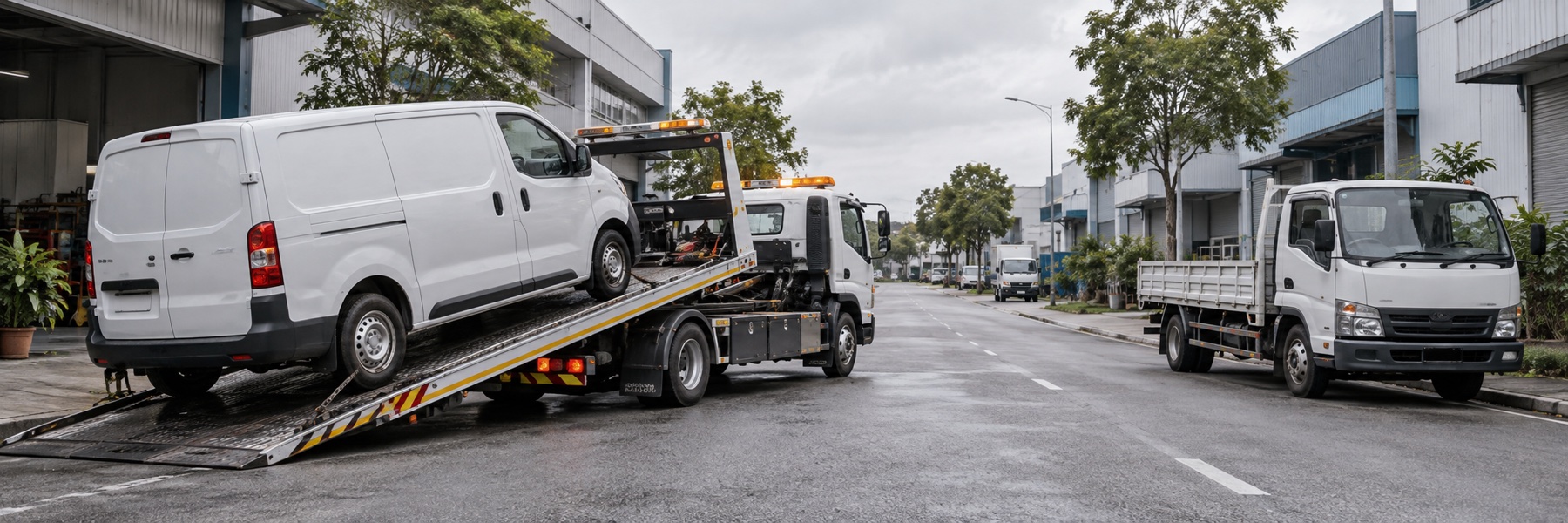
Towing for vans and lorries in Singapore
- 01Vehicle sizeShare the van or lorry’s dimensions and body type.
- 02Load and accessDescribe its cargo, condition and pickup restrictions.
- 03DestinationAgree where the vehicle can be safely received.
VAN AND LORRY TOWING
A van or lorry breakdown can interrupt deliveries, site work and the people waiting for the vehicle. Express Towing’s homepage states that its team handles vehicles including vans and lorries. A commercial tow, however, needs more information than an ordinary passenger-car pickup.
Vehicle weight, body type, load, wheel condition and access all affect whether a particular recovery truck is suitable.
This page is a starting point for van and lorry towing enquiries. It explains the information to prepare, when roadside assistance might be useful and how to agree a realistic collection plan.
We assess each request before confirming the equipment and arrangement; a general service statement is not a promise that every truck, bus or specialised vehicle can be moved in every situation.
When a commercial vehicle needs a tow
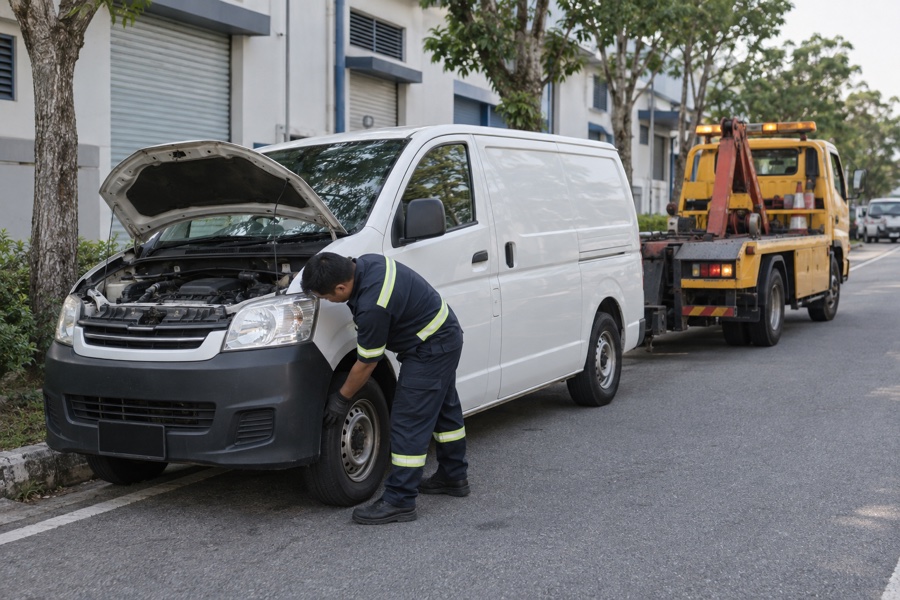
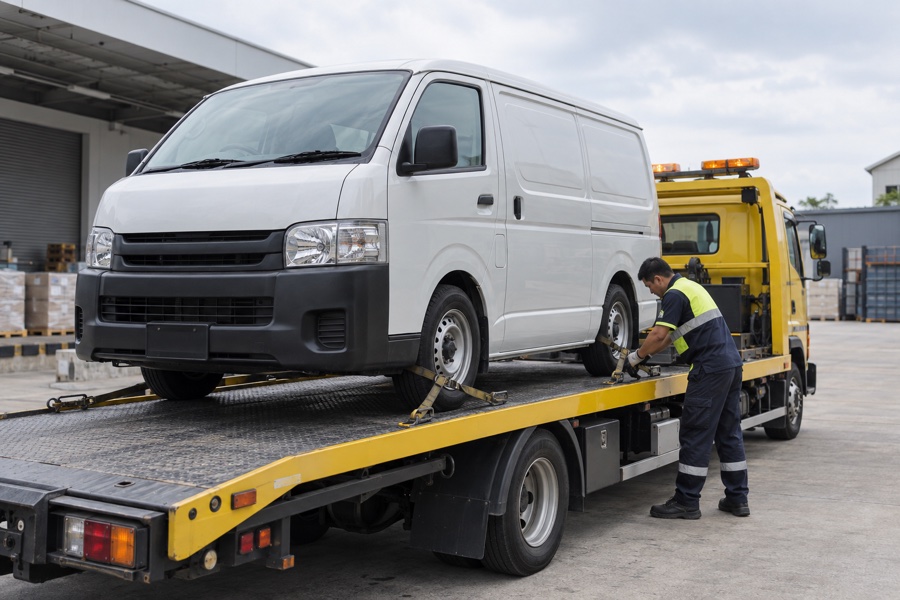
A failed battery, damaged tyre, mechanical fault or collision can leave a work vehicle unable to continue. Sometimes a roadside technician can help with a smaller problem. At other times, the vehicle needs to be moved to a workshop, depot or other agreed destination.
If the driver notices serious steering or braking trouble, fluid loss, overheating or a wheel that cannot roll, they should avoid trying to finish the journey and explain the symptoms when requesting help.
Our existing roadside assistance service discusses battery and tyre problems as well as towing when a vehicle cannot be revived on site. Whether on-site work is appropriate depends on the fault and the vehicle.
It is helpful to say what has already been tried, whether the engine starts and whether the vehicle can be moved safely to a collection point.
Vehicle details matter
Before arranging a tow, provide the registration number, make and model, vehicle category, estimated gross weight and dimensions if available. State whether it is a panel van, box truck, tipper, refrigerated vehicle or another body type. Explain whether it is loaded, what kind of load it carries and whether the load can remain in place.
A loaded vehicle may require a different assessment from an empty one.
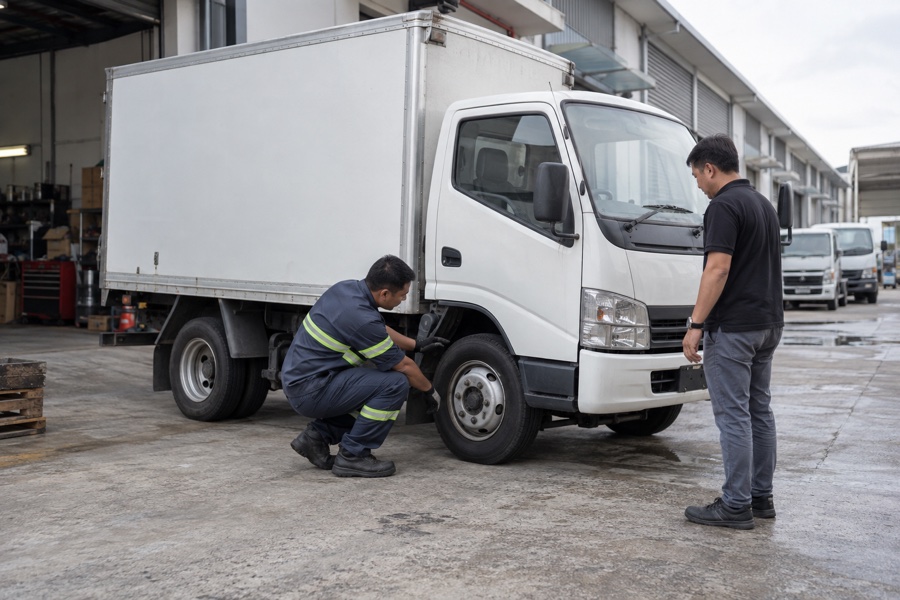
Also describe the current condition: are the tyres intact, can all wheels roll, is the steering usable and has any part of the vehicle been damaged? Share photographs of the front, side and the problem area if it is safe to take them.
Those details allow the team to consider truck capacity, towing method and site access before confirming that the job can be accepted.
Plan the pickup and destination
Commercial vehicles may stop at loading bays, industrial estates, construction sites, depots or roadside spaces that are difficult for a recovery truck to enter. Give the exact pickup location and describe any height limits, narrow turns, gates, ramps or loading restrictions.
If the vehicle is inside a port, controlled compound or other restricted area, confirm the access requirements and who can authorise entry.
Choose the delivery point before collection. A workshop must be able to receive the vehicle, particularly outside business hours. If it has size limits, loading rules or a specific entrance for recovery trucks, pass those details on. Agreeing the destination early reduces the risk of a delay or a second movement after pickup.
The quote should reflect the actual vehicle, access and journey rather than a generic passenger-car assumption.
Breakdowns during a working day
If the vehicle is carrying goods or equipment, decide who is responsible for the load and whether it must be transferred before towing. The driver or fleet manager should secure sensitive, loose or hazardous items according to their own procedures. Tell the recovery operator about anything that changes the vehicle’s weight or safe handling.
Do not ask a driver to reposition an unsafe vehicle merely to meet a delivery schedule.
Accident-damaged vans and lorries
For an accident, first attend to people and traffic safety and follow police or road-authority directions. The business’s motor insurer may have instructions about towing, reporting and the workshop destination. Check those instructions before confirming a separate tow.
The General Insurance Association’s accident guidance explains why motorists should contact their insurer and avoid unauthorised operators at the scene. For accident-damaged commercial vehicles, give the recovery team the insurer-approved destination and details of any damage that affects loading.
What to send with an enquiry
Supply the vehicle details, current condition, pickup and destination addresses, preferred timing, site access notes and a contact person at each end. Photographs of the vehicle and entrance can be useful when clearance is uncertain.
If the vehicle is in a basement or multi-storey carpark, mention this immediately; that setting may require a different recovery approach from an open roadside pickup.
Some commercial vehicles require equipment or approvals beyond a standard tow. We will need to establish suitability for the specific job rather than assume every commercial category is covered. If a particular recovery cannot be safely arranged, that should be clear before anyone travels to the site.
Keep the transport plan practical
A useful towing arrangement tells the operator what is being moved, why it cannot travel under its own power, where it sits and where it needs to go. For a van or lorry, the extra details about body, load and access are essential.
Ask for the proposed recovery method, scope of work and quote once those facts are known. If the vehicle belongs to a fleet, make sure the driver and fleet manager agree on the destination and handover contact.
For passenger vehicles, see our car towing service. For a minor battery or tyre problem, the battery and tyre assistance pages explain the related roadside options. Contact us with the commercial vehicle’s details so the request can be assessed on its actual requirements.
For a fleet vehicle, it is worth having one person coordinate the tow. The driver can describe the roadside condition, while the fleet contact can confirm the workshop, payment arrangement and whether a replacement vehicle or load transfer is being organised separately. Give both parties the same pickup and destination details.
If the vehicle is rented or leased, check whether the provider requires a particular recovery process before commissioning a third-party tow.
Do not assume that a quote for an empty van covers a loaded lorry, a height-restricted carpark or a vehicle with locked wheels. Each of those conditions may change the equipment, work and access needed.
A realistic assessment at the enquiry stage protects the driver, the cargo and the recovery crew from an avoidable failed pickup.
Frequently Asked Questions
What vehicle details help plan a van or lorry tow? | Give us the vehicle type, approximate dimensions and weight, whether it is loaded, and whether the wheels roll and steer. These details help us assess suitable equipment. |
Can every van or lorry be towed? | Not every recovery vehicle suits every van, lorry or site. We need to assess vehicle weight, condition and access before confirming what can be arranged. |
Should cargo stay in the vehicle during towing? | Tell us what the vehicle carries and whether the load is secure. We can discuss the situation before dispatch; do not assume that an unsecured or hazardous load can be moved as-is. |
What location information should we send? | Share the exact pickup point, road or carpark access, height restrictions, space to position a truck and the receiving destination. Photographs can help explain tight access. |
What if the van or lorry was in an accident? | Check your insurer’s towing and reporting instructions before choosing an operator or destination. Tell us about the vehicle’s damage and whether official recovery is already attending. |