
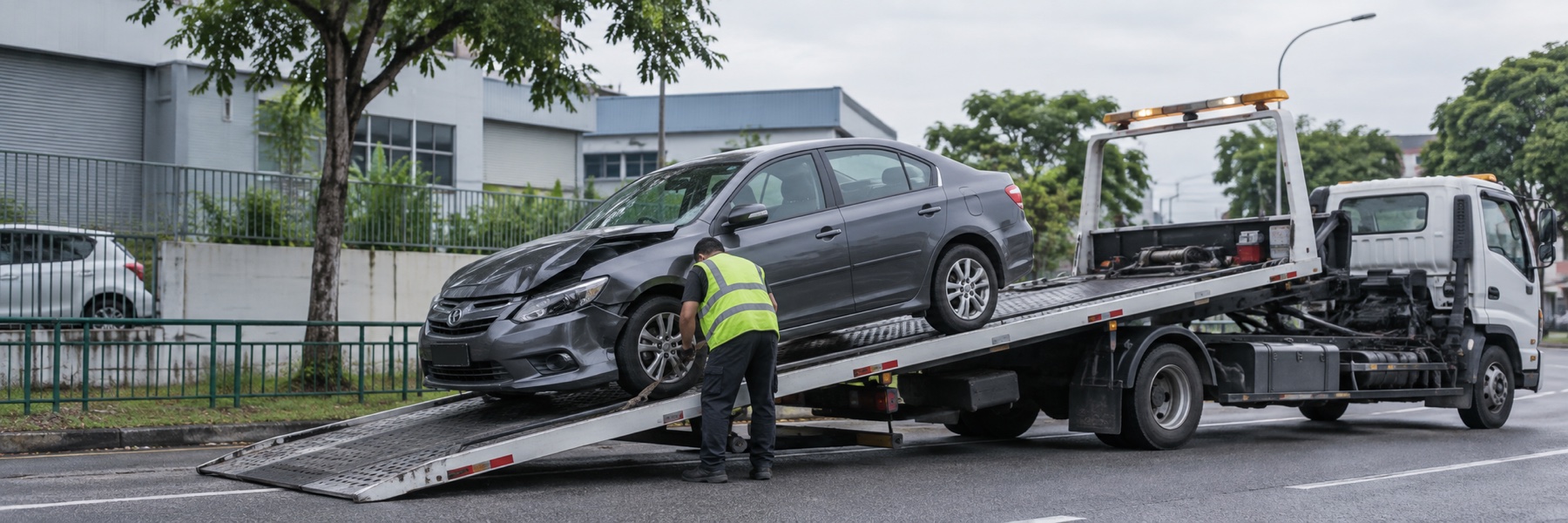
Accident towing support for Singapore motorists
- 01Safety and insurerFollow scene directions and check your insurer’s towing instructions.
- 02Vehicle damageDescribe whether the car rolls and steers, and any visible damage.
- 03DestinationAgree a suitable receiving location before loading.
ACCIDENT TOWING AND RECOVERY
A collision can leave a car unable to move safely, even when the visible damage looks limited. Express Towing provides vehicle recovery and towing in Singapore, including accident situations described on our car towing page.
This page explains what to consider when a tow is needed, how to give the recovery team useful information and why the destination should be agreed before the vehicle is moved.
People and road safety come first. If anyone is injured, seek emergency assistance. If the vehicle is on an expressway or in a tunnel, follow the directions of the authorities and the Land Transport Authority’s expressway guidance. Towing arrangements should come only after the immediate safety situation is under control.
When an accident leaves your vehicle undriveable
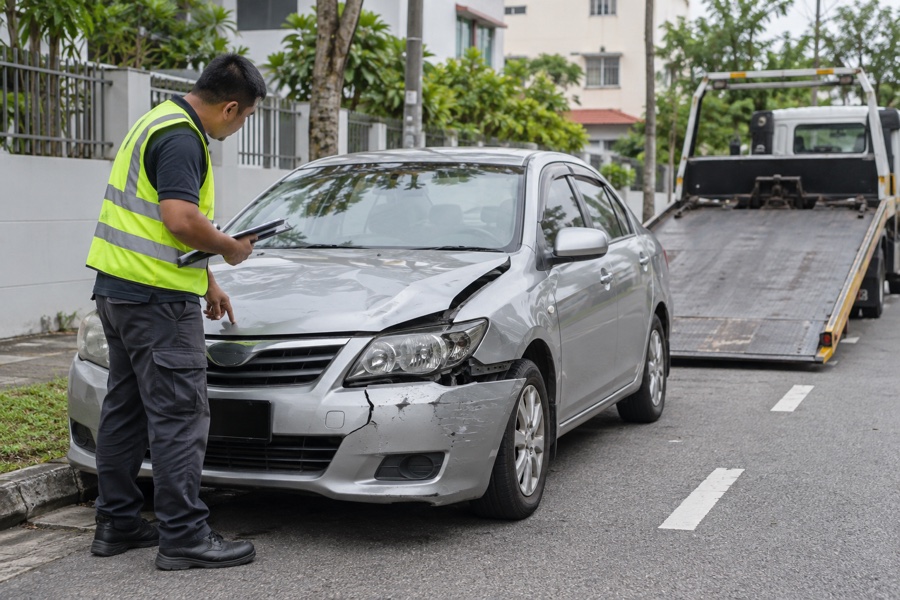
A damaged wheel, steering component, suspension part or body panel can make a vehicle unsafe to drive. Fluid leaks, smoke, unusual noises and warning lights are also reasons to pause rather than attempt to continue. If you are uncertain whether the car is roadworthy, explain the condition when requesting help.
The team can then discuss whether the vehicle needs a tow and what loading approach may be suitable.
Before any recovery, give the operator the exact location, vehicle make and model, registration number, visible damage and whether the wheels can roll. Tell them if the car is in a basement, a narrow bay, against a barrier or otherwise difficult to access.
Photographs of the vehicle and surrounding access route can help the team assess the job. Do not attempt to force a damaged vehicle to move just to make collection easier.
Check your insurance instructions before accepting a tow
The General Insurance Association of Singapore advises motorists involved in an accident to call their insurer’s hotline for a tow truck or further advice. The insurer may specify an authorised towing operator, accident reporting centre or workshop.
If a tow has not yet been arranged, check those instructions before engaging a separate provider; this helps avoid problems with the claim or destination.
Accident reporting is separate from physically moving the vehicle. GIA says accidents should be reported to the insurer within 24 hours or by the next working day, including where damage appears minor or the parties intend a private settlement. Take photographs and exchange the required particulars where it is safe and possible to do so.
A towing company can move a vehicle, but it cannot replace your insurer’s reporting process or decide whether a claim will be accepted.
Agree the collection and destination
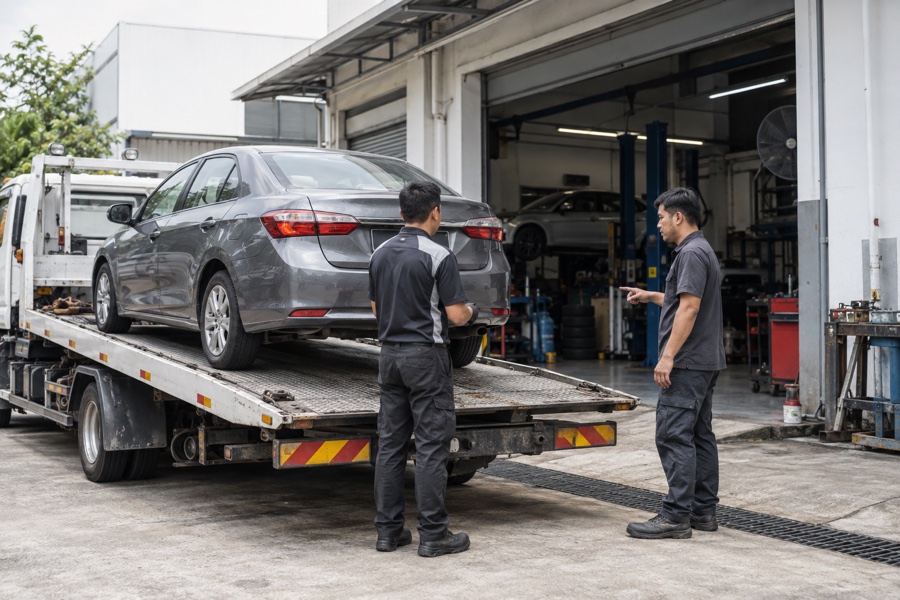
Once the authorised arrangement is clear, confirm where the vehicle should go: for example, an insurer-approved reporting centre, an authorised workshop or another destination permitted by the policy. Give the towing team the destination name and access details.
If the accident happens outside normal workshop hours, ask how the vehicle will be handed over and whether the destination can receive it.
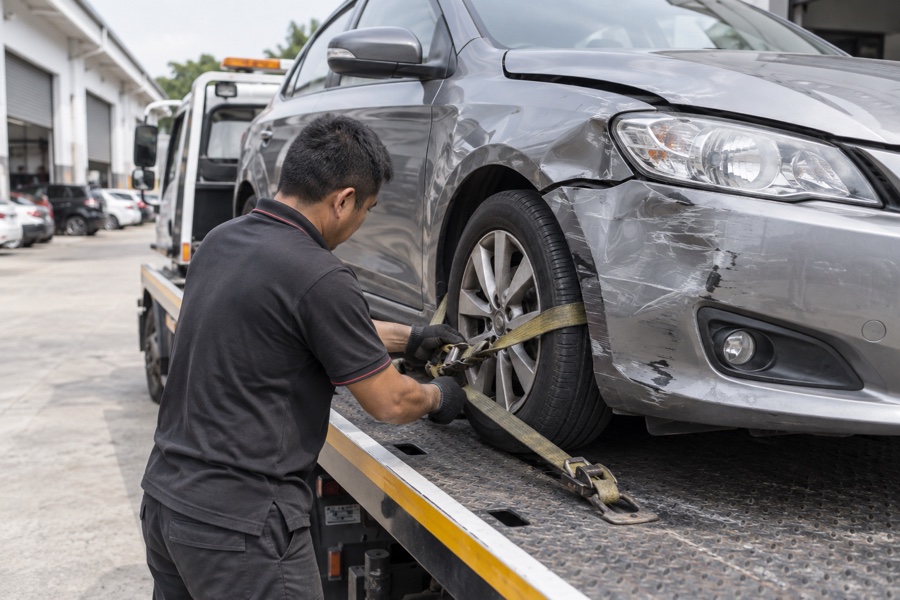
Express Towing’s existing car-towing service describes flatbed transport for fully disabled cars. The most suitable method still depends on the vehicle’s condition, drivetrain, available space and recovery access. Tell the team about any locked wheels, low clearance, damaged tyres or loose panels before dispatch so these can be considered rather than discovered after arrival.
At the scene
Keep yourself and passengers out of danger while waiting for the appropriate recovery service. Follow police, LTA or emergency personnel directions where they are managing the scene.
If the vehicle is on an expressway, LTA’s EMAS recovery process may take it to a designated carpark; an onward tow to the agreed workshop may then be a separate arrangement. Do not assume a private truck can replace that process at the accident site.
Information that helps the recovery team
Share the precise location, direction of travel if relevant, vehicle type and condition, where the car is positioned, whether keys are available and the confirmed delivery point. Mention if the vehicle is electric, unusually low, heavily loaded or unable to roll, so the team can assess whether it has suitable equipment.
These details help prevent an unsuitable truck being sent and make the handover clearer for everyone.
After the tow
Keep a record of the destination and any handover details supplied by the towing operator. Continue to follow your insurer’s instructions for reporting, inspection and repair. If you need ordinary roadside help rather than accident recovery, our roadside assistance service covers breakdown assessment, battery issues and tyre problems.
A vehicle that can be made safe on site may not need the same recovery process as a collision-damaged car.
Every accident differs. Vehicle condition, traffic control, carpark access and insurance requirements determine the sensible next step. Contact us with the circumstances once you have checked any insurer or authority instructions that apply to your case.
Arrange the right recovery, not just the nearest truck
An accident tow should have a clear purpose: remove an undriveable vehicle safely and deliver it to the agreed, appropriate location. Confirm the vehicle condition, proposed method, destination and quote before work begins. Where an insurer has already arranged towing, use that arrangement unless the insurer tells you otherwise.
Express Towing can discuss the recovery needs that fall within its service, but it should not be presented as your insurer’s appointed provider without confirmation.
If the damage is not accident-related and the car simply will not start, see our general car towing and battery replacement pages. Keeping these situations separate makes it easier to describe what has happened and request the right assistance.
Before authorising any work, ask what the quotation covers, where the car will be delivered and who will receive it. If access is unusually difficult or the vehicle cannot roll, disclose that at the outset so the proposed work can be assessed accurately. Keep any written insurer instructions, accident reference and workshop details to hand.
These details are more useful than a general promise of a fast tow because they help the vehicle reach the right place without creating a second problem after collection.
If you are helping someone else arrange recovery, confirm that the vehicle owner or authorised driver knows the plan. Share the driver’s contact details only with the appropriate recovery and insurance parties. At handover, note the condition of the vehicle and any items that must remain with it.
The aim is a clear, traceable transfer from the incident location to the agreed destination.
Frequently Asked Questions
What details should we provide for accident towing? | Tell us the vehicle location, condition, whether it rolls and steers, any access limits, and the agreed destination. We can then discuss a suitable recovery arrangement. |
Should we contact our insurer before arranging a tow? | Yes. Check your insurer’s accident and towing instructions first, including any approved operator, reporting centre or workshop requirement. |
What if the accident happened on an expressway? | Follow LTA’s EMAS and emergency instructions at the scene. Official recovery may move the vehicle to a safe carpark before private onward towing is arranged. |
Where can the accident vehicle be taken? | The destination should be agreed in advance and consistent with your insurer’s instructions. Tell us whether the receiving workshop or collection point is ready to accept the vehicle. |
Can a vehicle with damaged wheels be recovered? | Tell us about locked or damaged wheels, steering, suspension and any fluid leak. We need the actual condition and access details before discussing a loading approach. |